
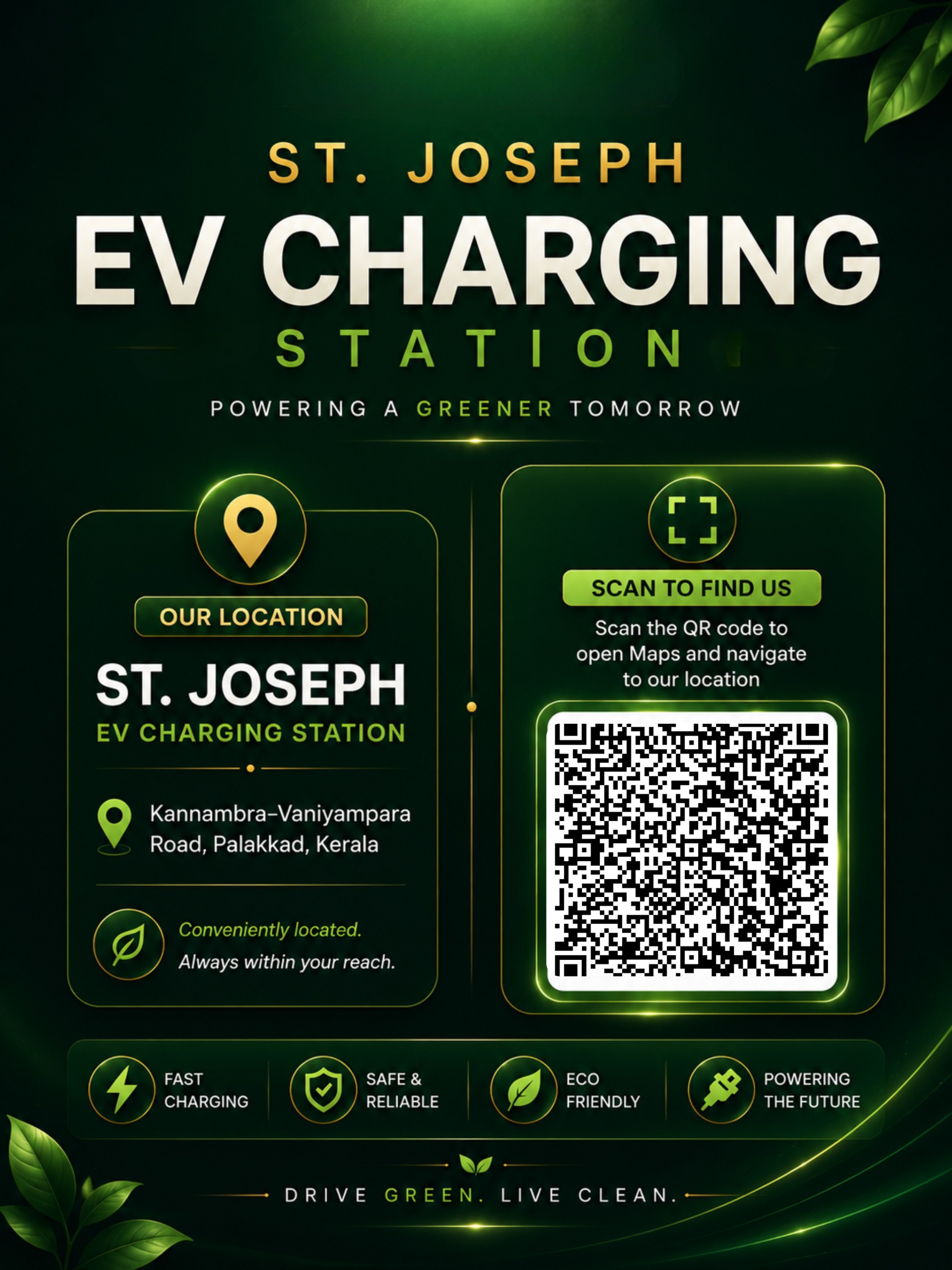
Are EVs Safe During Heavy Rain? The Ultimate Kerala Monsoon Driving & Highway Charging Guide
Driving through Kerala during the monsoon season is an extraordinary experience. The lush greenery, misty highways, and refreshing rain make driving across the Thrissur–Palakkad Highway (NH544) scenic and memorable. However, for EV owners, electric car buyers, and highway travellers, monsoon driving often raises serious questions. Can an electric vehicle handle waterlogged roads? Is it safe to charge an electric car during heavy downpours? What happens if water touches high-voltage battery packs?
If you are navigating your electric car, electric scooter, or fleet vehicle through Vadakkenchery, Alathur, Kannambra, or Palakkad, this detailed guide provides expert automotive insights into electric vehicle safety, battery engineering, IP ratings, and fast charging availability at St. Joseph EV Charging Station.
- Are EVs Safe During Heavy Rain? Myth vs Reality
- Myth #1 – EVs Are Not Safe During Rain
- No Engine Air Intake – A Big Advantage of EVs
- Modern EV Battery Packs Are Built Tough
- Understanding IP67 & IP68 Protection Ratings
- Smart Battery Safety Systems & Isolation Protocols
- Small Habits That Improve Monsoon EV Performance
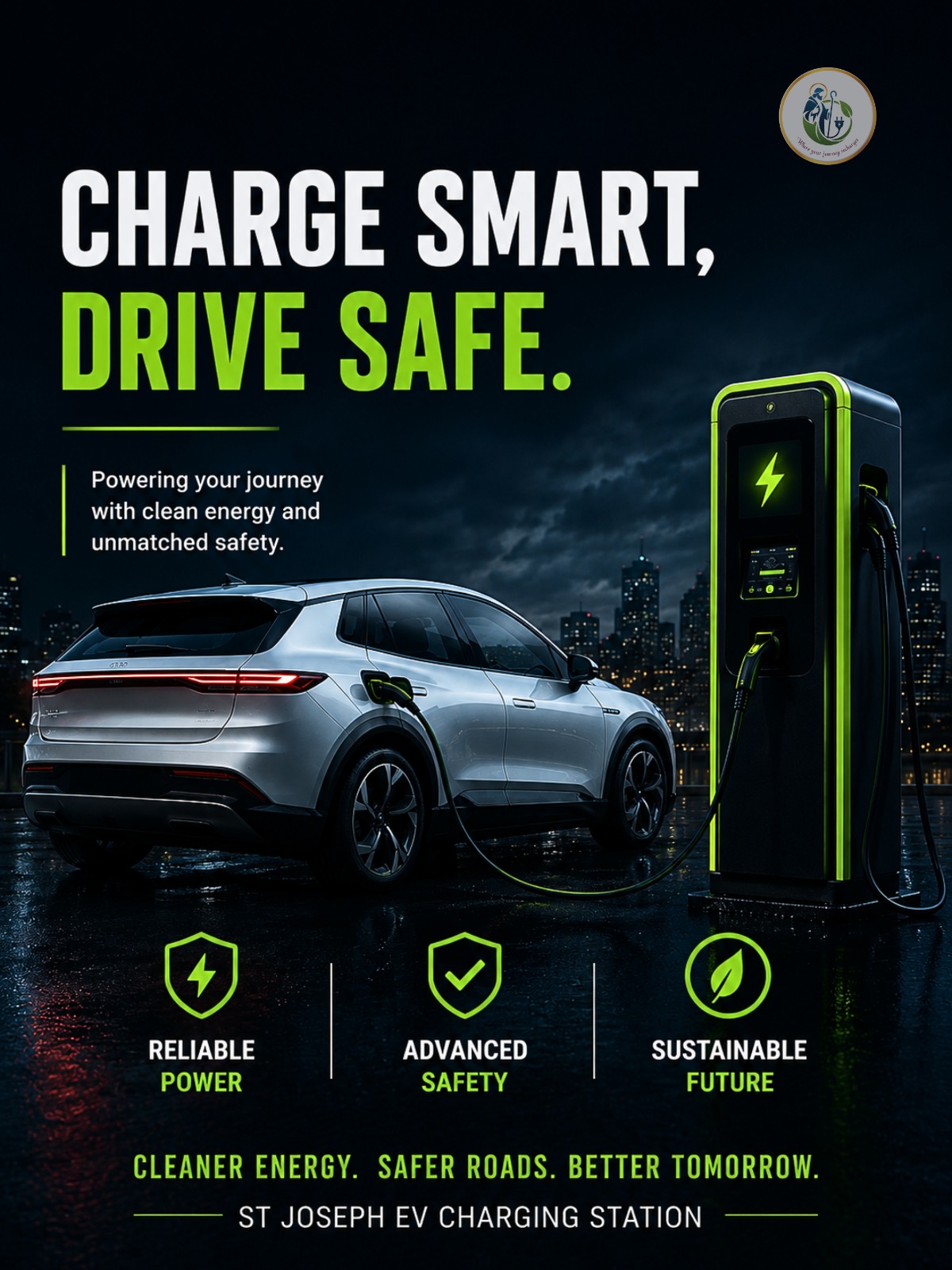
- Charge Smart. Drive Safe.
- Charging Services at St. Joseph EV Charging Station
- Convenient Location on NH544 Vadakkenchery
- Customer Amenities for Highway Travellers
- Charging Available for Every Type of Electric Vehicle
- Frequently Asked Questions (FAQ)
1. Are EVs Safe During Heavy Rain?
One of the most persistent myths surrounding Electric Vehicle Charging and monsoon driving is that water and electricity are a deadly combination. People naturally assume that driving an electric car through puddle-filled streets or plugging into a fast EV charger during rain poses an electrocution or battery damage risk. The truth is completely the opposite.
Electric vehicles are engineered from the ground up with multi-layered safety mechanisms. Unlike conventional internal combustion engine (ICE) cars, electric vehicles do not have open air intakes or exhaust systems that allow water inside crucial components. Every component carrying high voltage is hermetically sealed, heavily insulated, and shielded from external weather elements.
- Common Myth: Rainwater will cause short circuits in the electric motor or battery pack.
- The Truth: EV power electronics are completely sealed in airtight, liquid-proof aluminum casings.
- Engineering Safety: Advanced thermal management and automatic circuit breakers instantly isolate power in case of any anomaly.
- All-Weather Protection: Modern EVs undergo severe flood simulation tests before receiving commercial road approval.
2. Myth #1 – EVs Are Not Safe During Rain
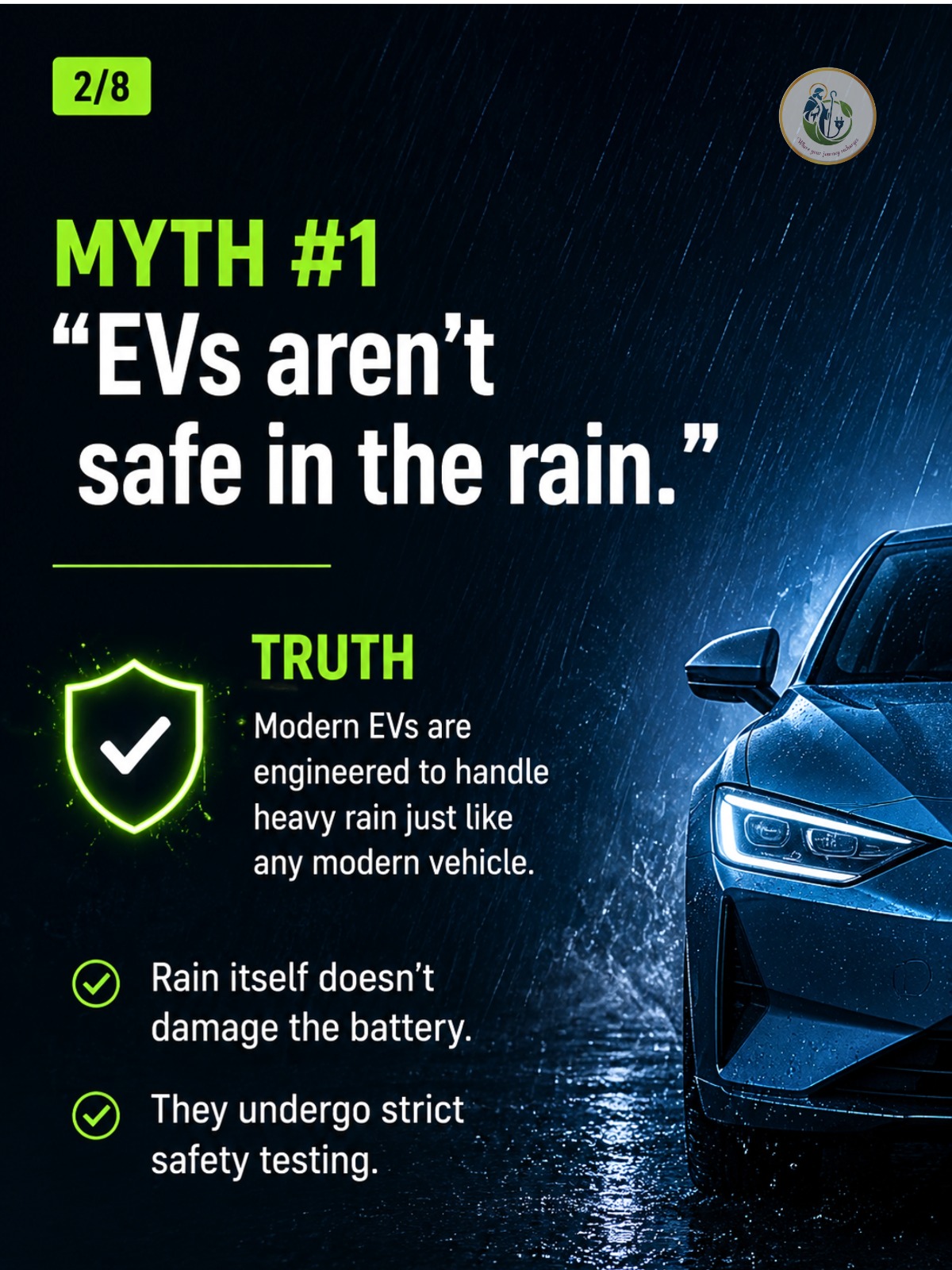
Let's debunk the myth that electric cars cannot handle heavy downpours. Electric vehicles are subjected to international waterproofing standards before hitting the market. Manufacturers test vehicles in flood basins, high-pressure water jet spray rooms, and extreme humidity chambers to ensure flawless operation.
The electrical system operates on an isolated ground architecture. This means the high-voltage electricity flowing from the battery to the electric motor never touches the body of the car. Even if water surrounds the vehicle exterior, electricity cannot pass into the cabin or body panels.
Key Water Resistance Features in Electric Vehicles:
- Triple-Sealed Connectors: Heavy-duty silicone gaskets seal all high-voltage cabling points.
- High-Voltage Isolation Monitoring: The onboard computer continuously measures resistance across electrical circuits.
- Automated Fault Detection: Any voltage leakage triggers an instant physical disconnect within milliseconds.
- Safe Plug & Charging Architecture: The charging gun and vehicle inlet do not initiate current flow until a secure physical and digital handshake is confirmed.
3. No Engine Air Intake – A Big Advantage of EVs
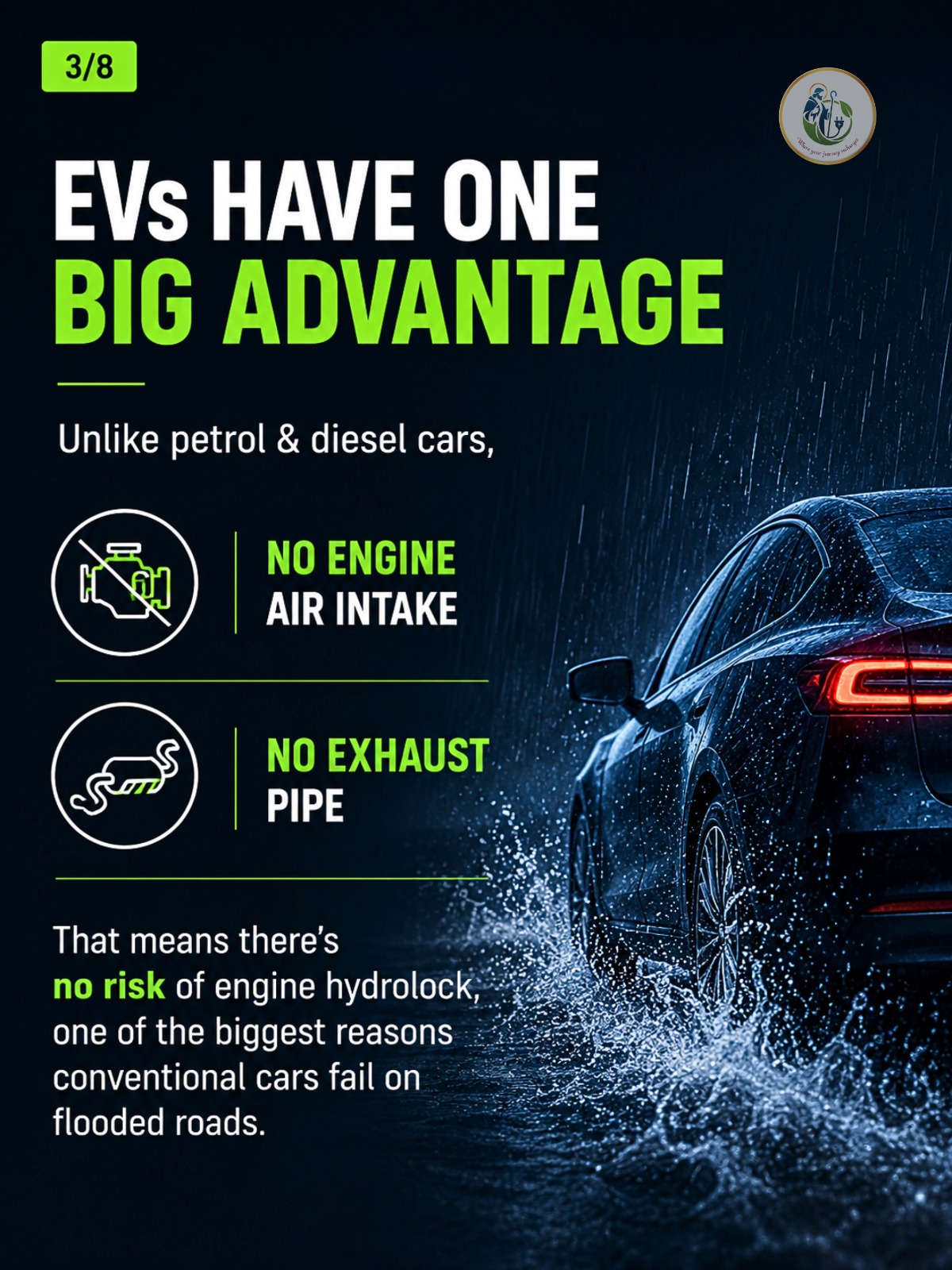
In traditional petrol or diesel cars, driving through standing water poses a major threat known as hydrolock. If water enters the engine air intake, it travels directly into the cylinders, destroying the internal pistons and causing complete engine breakdown. Furthermore, water entering the exhaust tailpipe can stall the vehicle instantly.
Electric vehicles have a massive architectural advantage here: they have zero air intake and zero exhaust pipes. An electric drive motor operates entirely as a closed system that requires no outside air for combustion.
- Zero Hydrolock Risk: EV motors cannot suck in water, protecting you from crippling engine overhaul costs.
- Sealed Drive Units: Electric motors and gearboxes are fully enclosed in cast aluminum housings.
- Superior Water Wading Depth: Many modern electric SUVs and hatchbacks offer superior water wading capacities compared to similar petrol counterparts.
- Consistent Torque: Electric motors deliver instant torque at low speeds, helping you navigate waterlogged stretches smoothly without engine stalling.
4. Modern EV Battery Packs Are Built Tough
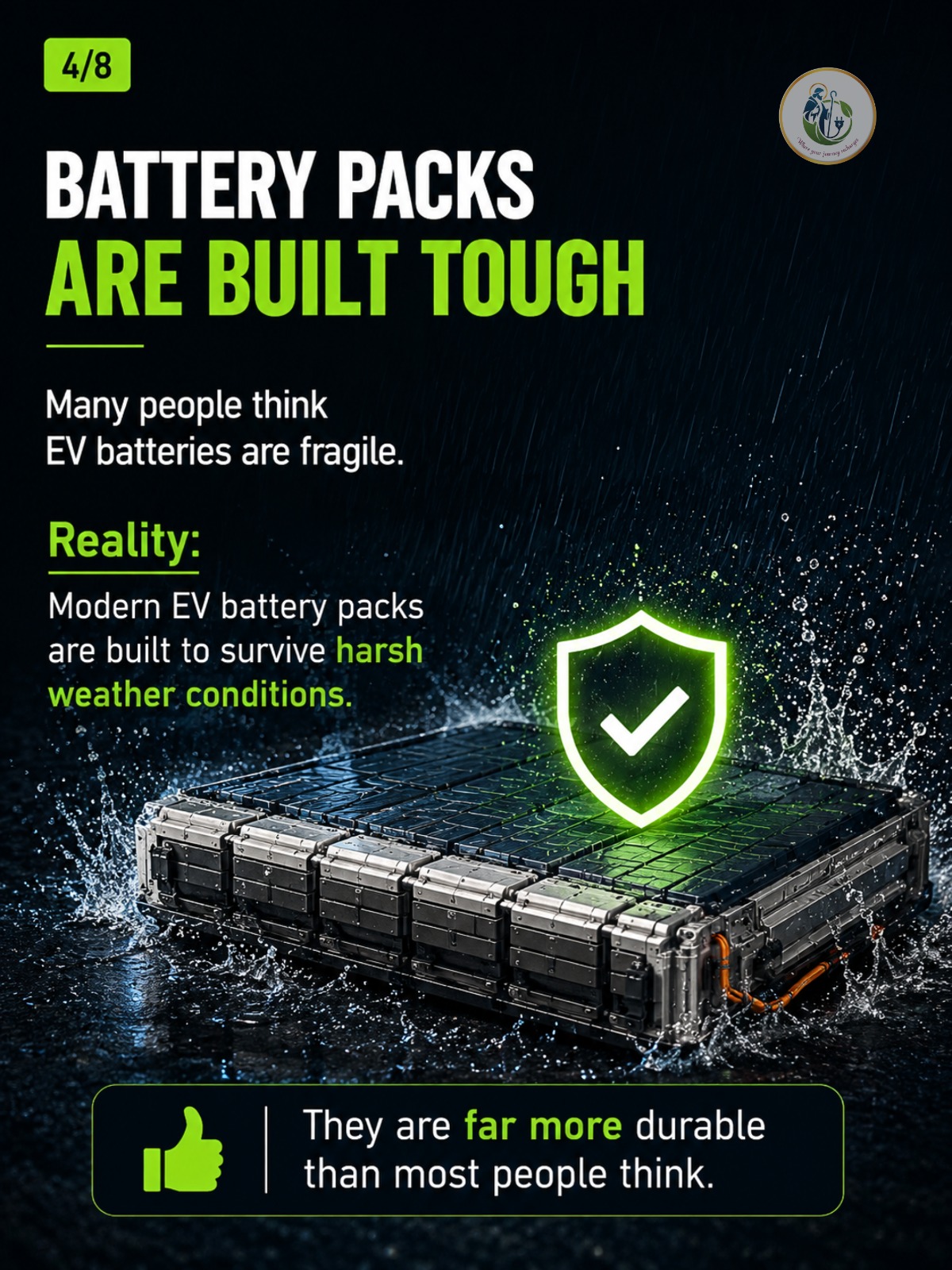
The lithium-ion battery pack is the heart of an electric vehicle. Located beneath the floorboard, it is engineered to withstand extreme physical impacts, thermal stress, and environmental exposure. Automakers encase battery cells inside heavy-duty aluminum or high-strength steel enclosures reinforced with internal cross-members.
These battery enclosures are designed to last the entire lifespan of the vehicle while offering complete defense against rain, mud, highway road debris, and underbody scrapes.
5. Understanding IP67 & IP68 Protection Ratings
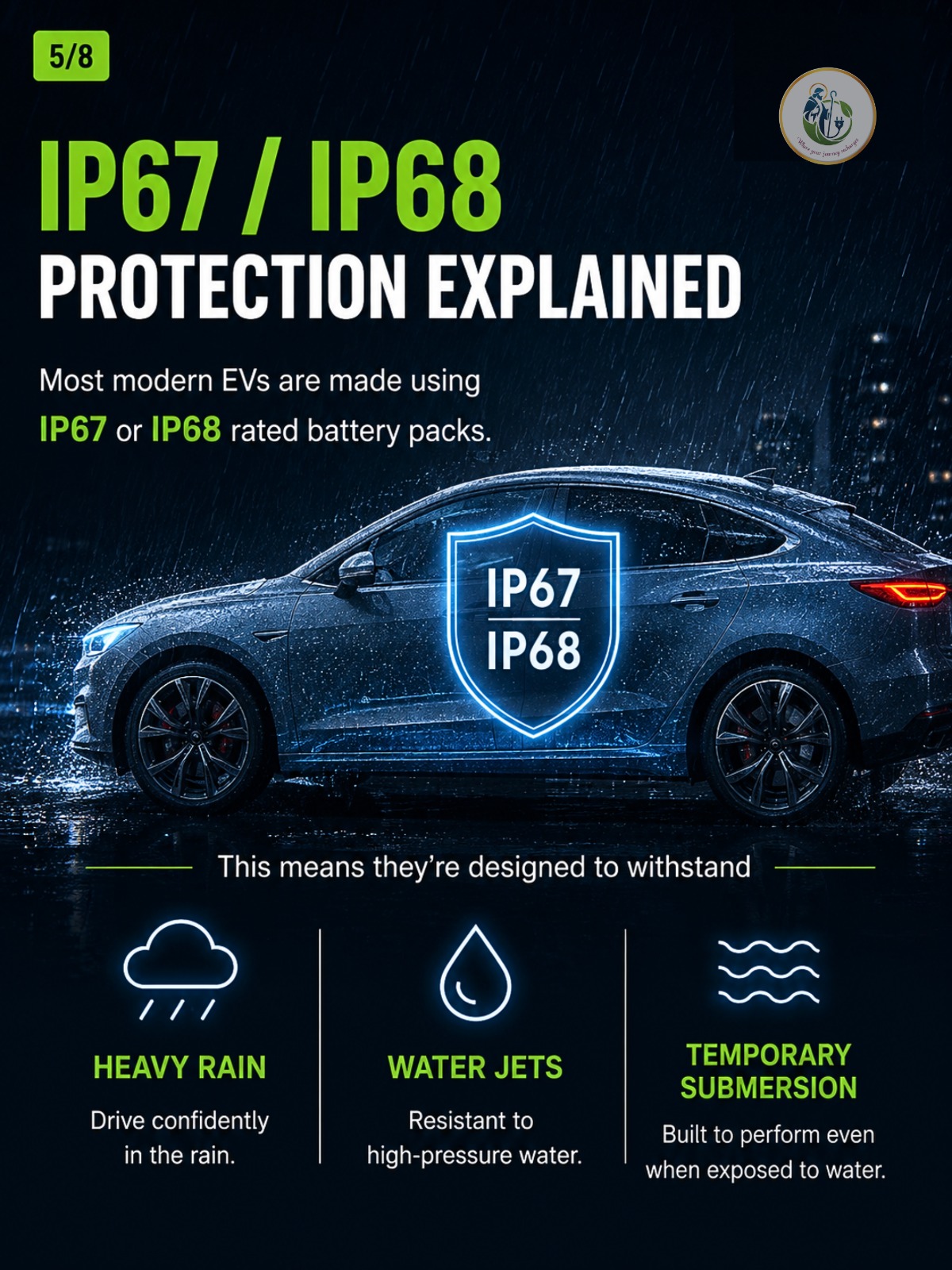
When researching electric vehicles or Fast EV Chargers in Palakkad, you will frequently see terms like IP67 or IP68. These are International Protection (Ingress Protection) ratings that measure how well an electrical enclosure stops dust, solids, and liquids from entering.
- IP67 Rating: "6" denotes total dust-tight protection. "7" certifies that the component can be submerged under 1 meter of water for 30 minutes without a single drop penetrating the interior.
- IP68 Rating: Represents continuous water immersion at depths greater than 1 meter under specified pressure conditions.
- Water Jets Resistance: EV charging connectors and station hardware (like our CCS2 fast chargers) feature IP-rated seals that resist high-pressure rainwater spray and storm weather.
6. Smart Battery Safety System & Isolation Protocols
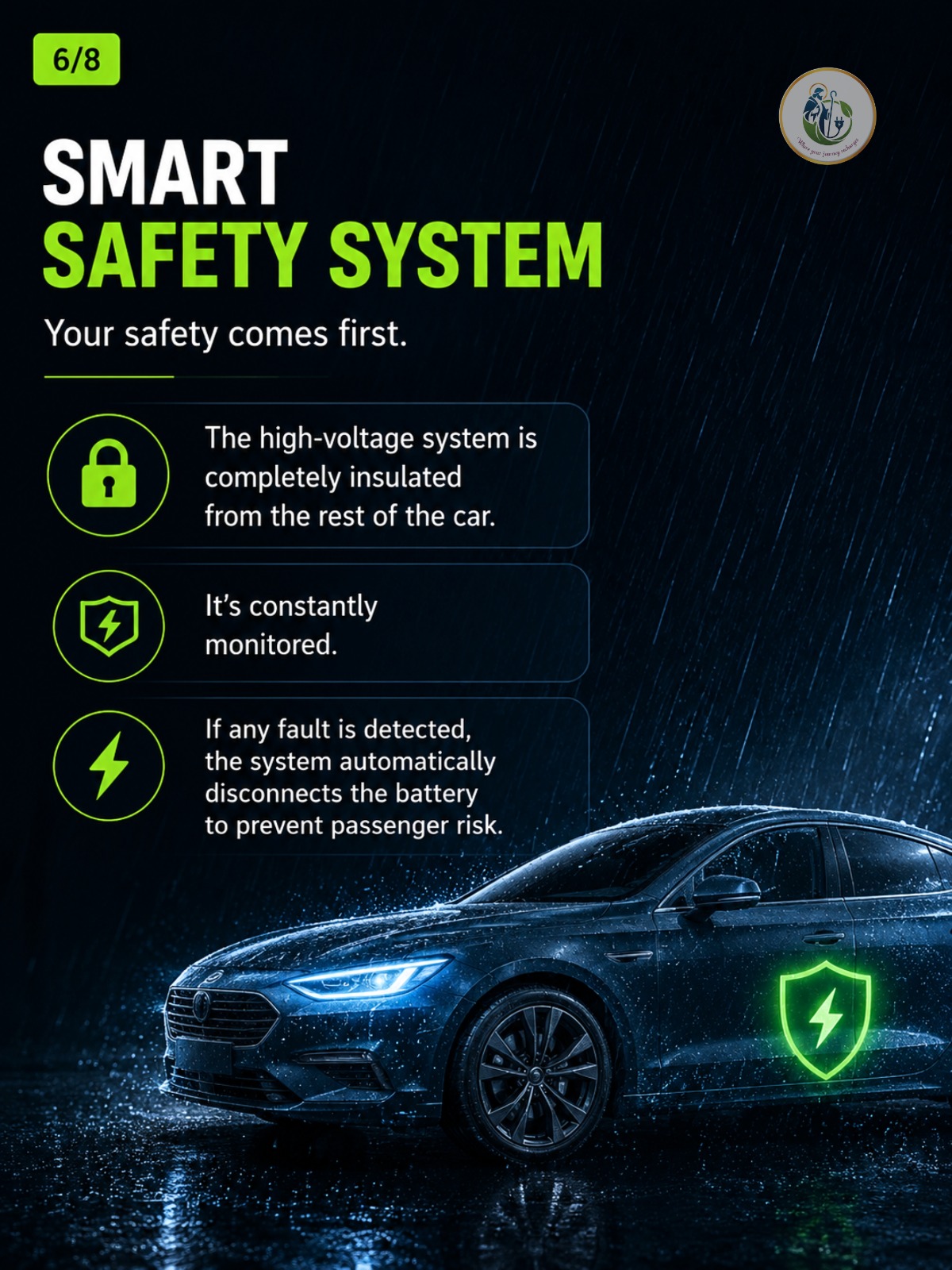
Behind the hardware lies intelligent software. Every modern electric vehicle is equipped with a sophisticated Battery Management System (BMS) that operates 24x7. The BMS continuously monitors voltage, cell temperatures, current flow, and insulation resistance.
If the system detects even a slight moisture anomaly or ground fault within the charging gun or vehicle inlet, it instantly triggers high-voltage pyrofuses or contactors, cutting off electrical current in less than a fraction of a second. This makes charging your electric car at St. Joseph EV Charging Station Vadakkenchery exceptionally safe even during stormy Kerala rain.
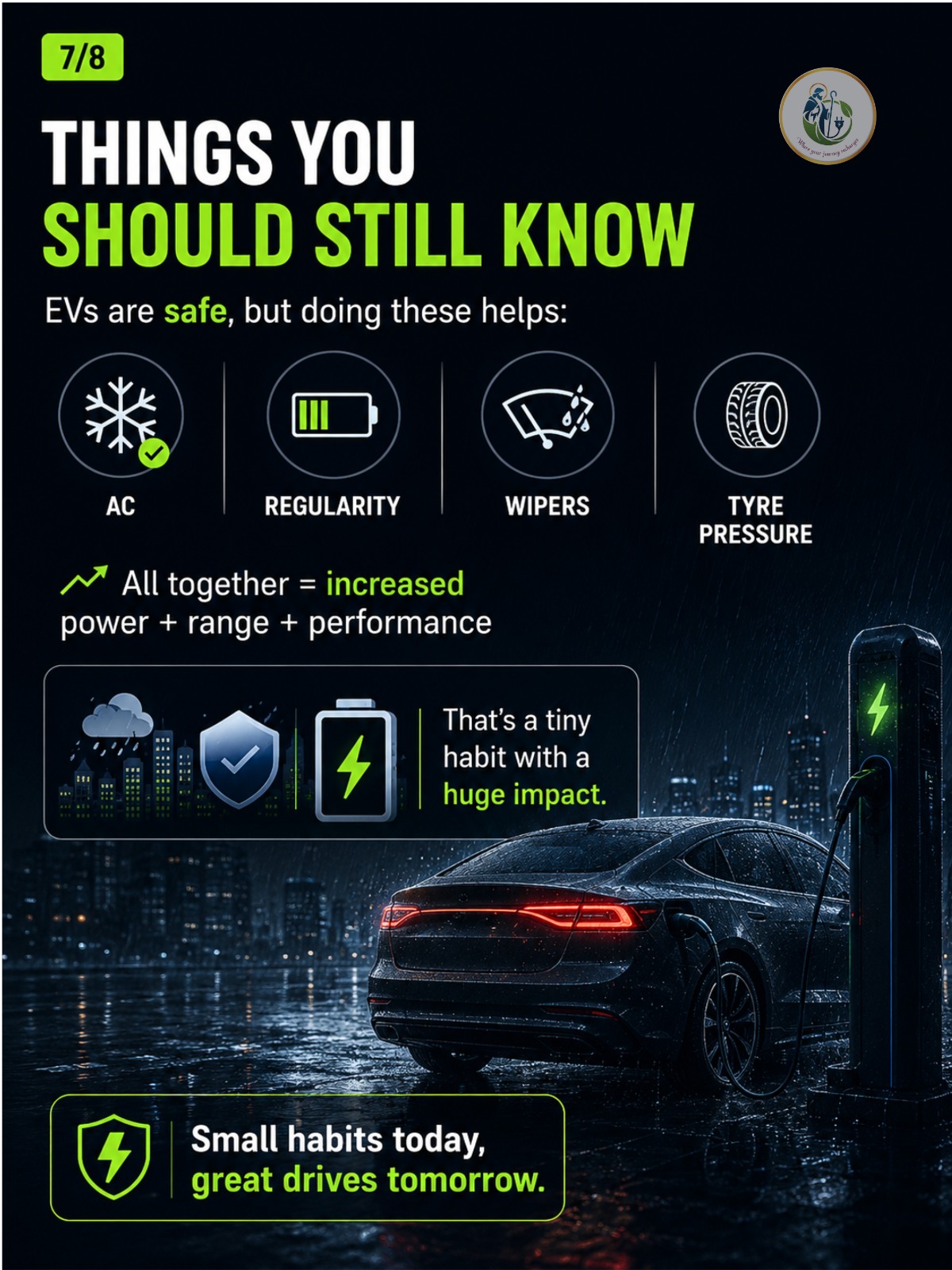
7. Small Habits That Improve EV Performance in the Monsoon
While your electric car's battery and motor are fully protected against rain, driving during monsoons requires extra driver awareness. Adopting a few simple maintenance habits ensures maximum driving range, optimal traction, and complete road safety:
- Maintain Correct Tyre Pressure: Rain-slicked roads reduce tire traction. Keep your tyres inflated to recommended levels to prevent hydroplaning across highway puddles on NH544.
- Check Wiper Blades & Defoggers: Clear visibility is vital. Ensure windshield wipers are streak-free and use your EV's climate control defogger to keep glass clear.
- Optimize Climate Control Usage: Running the cabin defogger continuously consumes modest battery energy. Plan your stops at a Fast Charging station in Kerala to keep your battery topped up.
- Adjust Regenerative Braking: On extremely wet or slippery roads, switch your regenerative braking to a lower setting to avoid wheel lockup during sudden slowdowns.
- Charge Clean & Dry: Before plugging in, wipe off any excess rainwater from the outer flap cover. Charging guns at St. Joseph EV Charging Station are kept covered and dry for your convenience.
8. Charge Smart. Drive Safe.
Transitioning to electric mobility is not just about environmental sustainability—it is about enjoying a superior, safer, and more economical driving experience. Whether you are commuting daily between Thrissur and Palakkad or taking a scenic road trip across Kerala, modern EV technology gives you total peace of mind in all weather conditions.
9. Charging Services at St. Joseph EV Charging Station
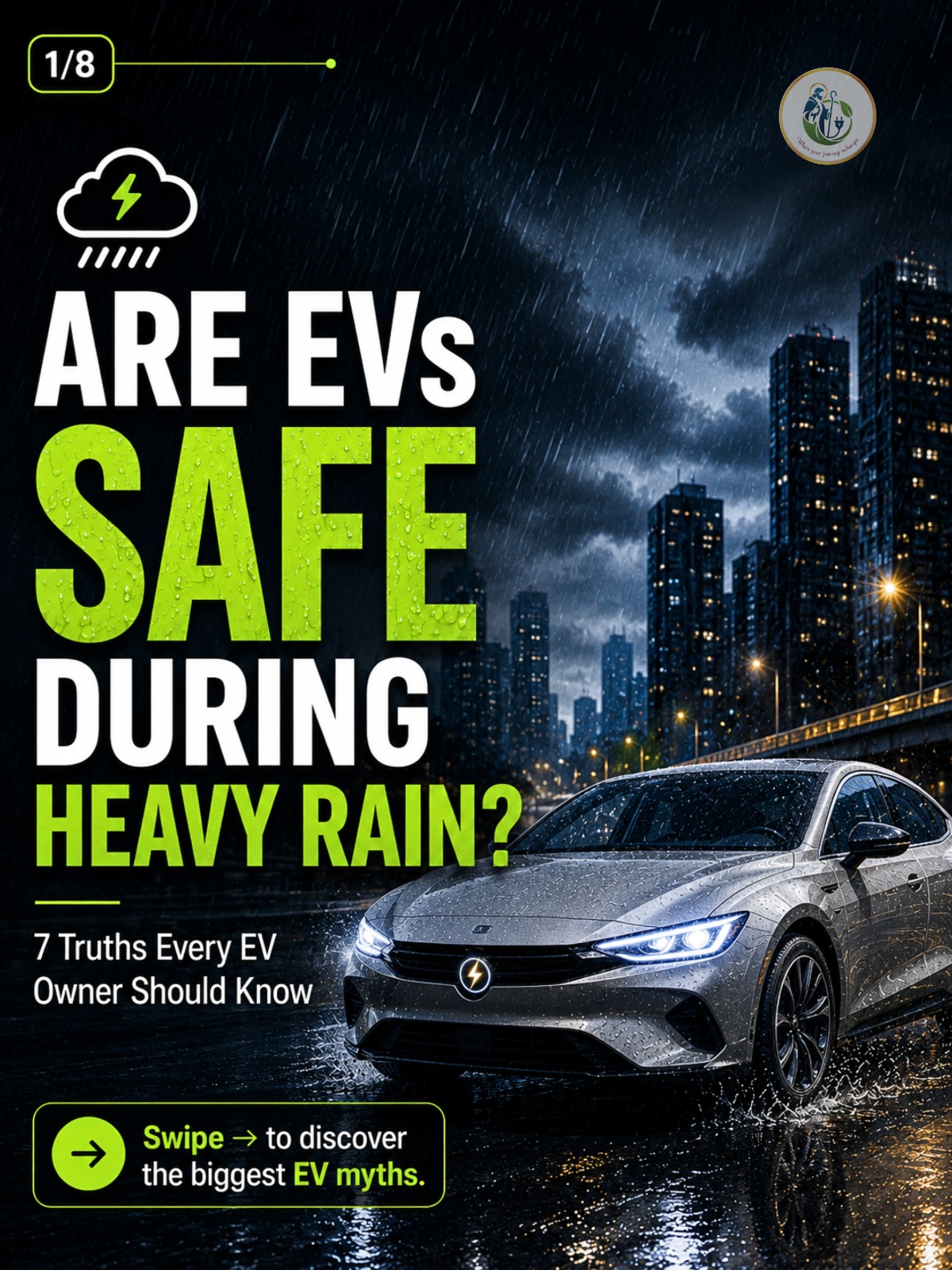
Located conveniently along the Kannambra–Vaniyampara Road in Vadakkenchery, St. Joseph EV Charging Station is designed to meet all your EV charging needs. We provide commercial-grade charging equipment tailored for electric cars, two-wheelers, three-wheelers, and light commercial vehicles.
Our Charging Infrastructure & Hardware Highlights:
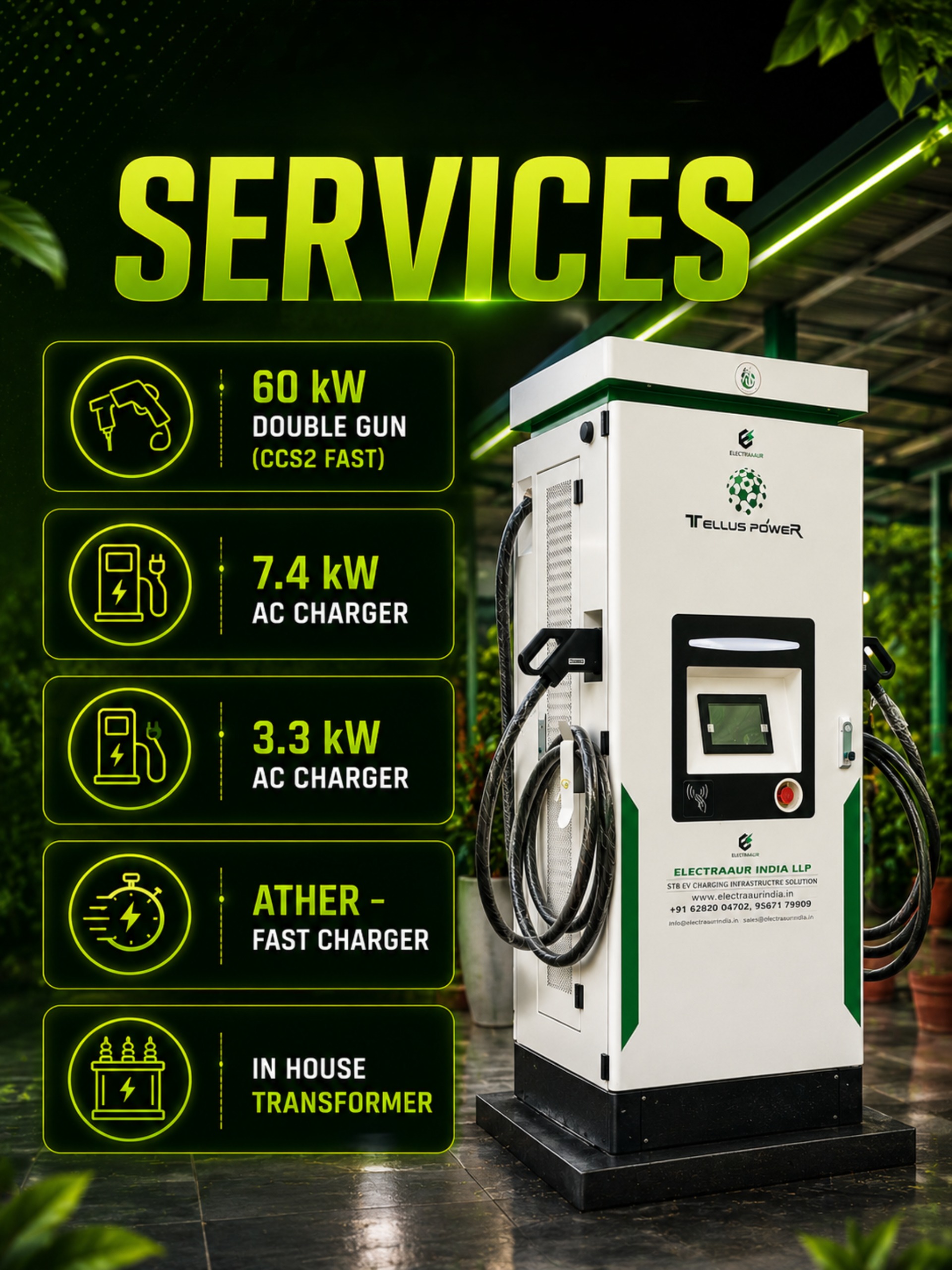
- ✔ 60kW CCS2 DC Fast Charger: Rapidly charge electric cars like Tata Nexon EV, MG ZS EV, Hyundai Ioniq 5, BYD Atto 3, Mahindra XUV400, and Kia EV6. Gain up to 80% charge in just 30–45 minutes!
- ✔ 7.4kW AC Type-2 Charger: Ideal for safe, steady top-ups for cars and long-range vehicles.
- ✔ 3.3kW AC Charger: Convenient power points for electric scooters, 2-wheelers, and 3-wheelers.
- ✔ Dedicated Ather Fast Charger: Specialized rapid charging for Ather electric scooter owners.
- ✔ Dedicated In-House Transformer: Guaranteed stable voltage, consistent high-speed power output, and zero grid-fluctuation risks.
- ✔ 24×7 Service Availability: Round-the-clock access so highway travellers are never stranded.
10. Convenient Location Near NH544 Highway
When travelling on the busy NH544 (Thrissur–Palakkad National Highway), finding an easily accessible, hassle-free charging stop is essential. St. Joseph EV Charging Station is strategically positioned to serve local residents and long-distance highway travellers alike.
- Exact Address: Kannambra–Vaniyampara Road, Vadakkenchery, Palakkad, Kerala.
- Nearby Key Hubs: Vadakkenchery Town, Alathur, Kannambra, Nenmara, Palakkad City, and Thrissur.
- Highway Accessibility: Located just moments off the Thrissur–Palakkad Highway, allowing quick pull-ins without driving deep into congested city streets.
11. Premium Customer Amenities for Highway Travellers
Charging your vehicle should be a comfortable and refreshing experience. At St. Joseph EV Charging Station, we offer hospitality amenities designed for families, tourists, senior citizens, and commercial operators:
- Comfortable Waiting Area: Relax in a clean, shaded seating environment.
- Hygienic Washrooms: Well-maintained restroom facilities for men, women, and children.
- Senior Citizen Friendly: Easy step-free access and assistance available on request.
- Refreshments & Snacks: Enjoy cool beverages, hot coffee, tea, and quick snacks nearby.
- 24/7 CCTV Surveillance: Fully lit premises with constant security monitoring for family safety.
- Spacious Safe Parking: Wide bays for easy maneuvering of large electric SUVs and commercial fleets.
12. Charging Available for Every Type of Electric Vehicle
- Electric Passenger Cars & SUVs: Tata Nexon EV, Punch EV, Tiago EV, MG ZS EV, Comet EV, Hyundai Kona/Ioniq 5, Mahindra XUV400, BYD Seal, BMW i4, and more.
- Two-Wheeler EV Users: Ather 450X/Rizta, Ola S1 Pro, TVS iQube, Bajaj Chetak, Hero VIDA, and custom electric bikes.
- Three-Wheeler EV Users: Electric auto-rickshaws, Mahindra Treo, Piaggio Ape E-City, and local cargo loaders.
- Fleet & Commercial Operators: Electric cabs, tourist taxis, and delivery vehicles travelling through the Palakkad–Thrissur corridor.